Textile guide · Cotton knits
Coyuchi Trousers: Understanding Organic Cotton Knit, Fit, and Care
A pair of cotton lounge trousers may look simple, but its comfort depends on several things working together: the fiber, the way that fiber is knitted, the cut of the garment, and the care it receives. Understanding those details makes it easier to assess organic cotton trousers for everyday wear—and to keep them in good shape over time.
The feel of a fabric begins with its structure
Cotton is familiar enough to seem straightforward. It is a plant fiber, spun into yarn and made into fabric, then shaped into garments. Yet the same fiber can produce cloth with very different character. A crisp woven shirt, a dense canvas tote, and a soft pair of lounge trousers may all contain cotton, but their weight, surface, and movement are not interchangeable. Fiber content is one part of the story; construction gives it form.
In a knit fabric, yarn is formed into connected loops. Those loops can give the material more natural stretch and flexibility than a typical woven cloth, where yarns cross at right angles. The result is often a fabric that moves readily with the body. In trousers designed for relaxed wear, this flexibility can make sitting, stretching, and moving through ordinary routines feel less restrictive.
Knits also vary. A smooth, fine knit may feel light against the skin, while a denser or heavier construction can feel more substantial. The surface might be plain and even, or textured through the way the loops are arranged. These variations affect drape, warmth, and how a garment responds to repeated wear. “Cotton knit” therefore describes a family of fabrics, not a single fixed texture.
For lounge trousers, the useful question is not whether one construction is universally best. It is whether the fabric suits the intended setting. Lightweight cloth may feel comfortable in a warm room or under other layers, while a denser knit can offer more coverage and substance. The garment’s design, climate, personal preference, and laundering routine all play a part.
What organic cotton tells you—and what it does not
Organic cotton refers to how the cotton is grown and, when a recognized standard applies, how parts of its processing and supply chain are assessed. It is not a description of softness, thickness, or stretch. Those qualities depend on the yarn and fabric construction, as well as finishing and garment design. Two organic cotton fabrics can feel quite different in the hand.
Certifications can give readers a more specific basis for understanding a textile claim. For example, the Global Organic Textile Standard (GOTS) is a textile-processing standard with criteria that address organic fibers and aspects of processing. A certification is meaningful within the boundaries of the standard and the certified product or supply chain; it should not be treated as a guarantee of every possible environmental or social outcome. Checking the precise label and its scope is more informative than relying on a broad, unqualified use of the word “organic.”
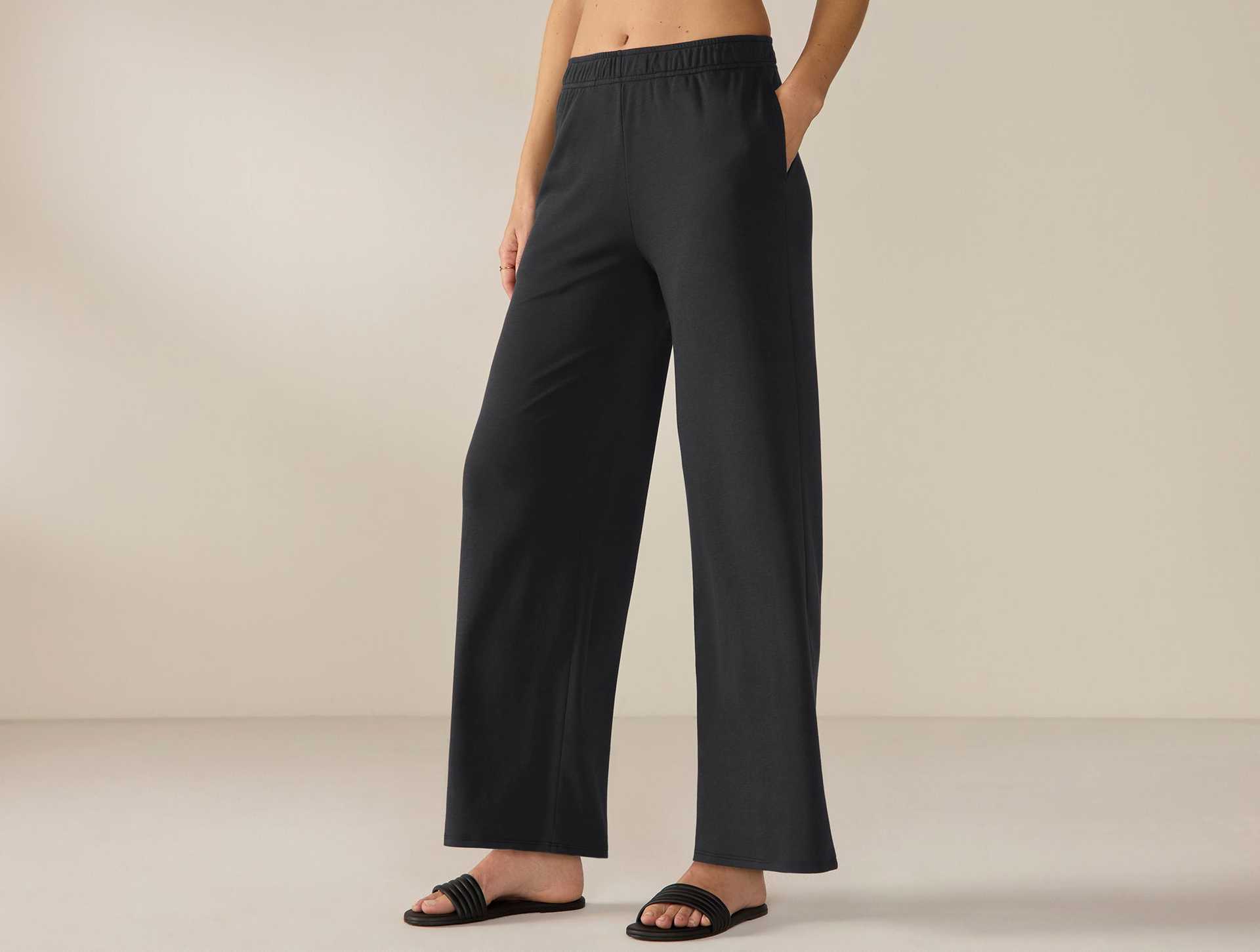
The [Coyuchi Women's Pima Organic Knit Wide Leg Pant](/products/womens-pima-organic-knit-wide-leg-pant-5880) is listed as 100% organic Pima cotton, with GOTS certification. Its product details describe a soft, smooth knit, an elastic waistband, two hip pockets, and one back pocket. The cotton is described as grown and knit in Peru. These specifics help explain what the garment is made from and how it is constructed, while leaving room for the wearer’s own assessment of fit and feel.
Pima cotton is a type of cotton, not a knit structure. The fiber name identifies the raw material; “knit” describes how the yarn is made into fabric. Keeping those terms distinct helps when comparing clothing labels. A fiber may contribute to the yarn’s qualities, but the finished garment’s comfort still depends on the fabric weight, loop structure, finishing, and pattern.
Organic status also does not mean that a garment is automatically more durable or easier to care for. Longevity depends on yarn quality, construction, use, and maintenance. The strongest material assessment combines the fiber label with details about fabric, seams, fit, and washing instructions.
Reading fit beyond the size label
Fit is more than a number on a tag. Lounge trousers should allow the wearer to move without the waistband digging in, the fabric pulling across the seat, or the legs catching at the knees. A relaxed silhouette can feel easy, but it still needs to sit securely and fall in a way that suits the wearer’s proportions and intended use.
Wide-leg trousers have more room through the leg than tapered styles. That shape can allow air to circulate and fabric to move freely, while creating a flowing line. The way it hangs depends on the cloth: a light knit may swing and drape close to the body, whereas a heavier fabric may fall more vertically. Neither effect can be inferred from the silhouette alone; the fabric’s weight and the cut work together.
An elastic waistband offers flexibility as the body shifts between standing, sitting, and resting. The width and firmness of the elastic matter, as does how it is enclosed in the garment. A waistband should feel secure without creating uncomfortable pressure. Pockets, meanwhile, add everyday usefulness but can influence how the fabric hangs, especially when filled. Their placement and depth may matter as much in practice as their number.
When evaluating trousers in person, move through a few ordinary motions: sit, stand, take a step, and bend. Notice whether the waistband stays in place, whether the knees feel constrained, and whether the fabric becomes uncomfortably warm. Check the hem against the footwear or indoor setting where the trousers are likely to be worn. Online, use the garment’s size chart and compare its measurements with a similar item that fits well; a general label such as “wide leg” cannot substitute for measurements.
Fit preferences are individual. Some people want a close waist and generous leg; others prefer an overall looser shape. The aim is not to find a universal ideal but to understand how the garment’s proportions relate to comfort, movement, and the wearer’s routine.
Why knit trousers can feel breathable
Cotton is often valued for its comfortable, familiar hand and its ability to take up moisture. But breathability is not a property of fiber alone. Fabric density, yarn size, finishing, and garment shape influence how air and heat move around the body. A loose-fitting trouser may feel cooler than a close-fitting one made from a similar fiber simply because it leaves more space for air to circulate.
Knit loops give fabric flexibility, but they do not make every knit airy. A compact knit can be smooth and substantial; an open structure may allow more air through but provide less coverage. The right balance depends on where and when the trousers will be worn. For year-round loungewear, consider how the fabric behaves in the room where it will be used, whether it will be layered, and whether the wearer tends to feel warm or cool.
Softness, too, is not a single technical measure. It is an impression shaped by the fiber, yarn, fabric surface, and finish. A smooth surface may feel gentle to one person, while another may prefer a brushed or more textured hand. The phrase “soft cotton” can be useful as a broad description, but it does not replace details about construction or the experience of touching and wearing the garment.
Care starts with the care label
Even a resilient natural fiber can change when exposed to heat, friction, or an unsuitable wash cycle. The safest starting point is the garment’s care label, which reflects the maker’s instructions for that particular fabric and construction. The listed Coyuchi trousers are described as machine washable in cold water on a gentle cycle with like colors, with tumble drying on low and prompt removal. A warm iron is listed as optional.
Following those directions can help reduce unnecessary stress on the knit. Cold water and a gentle cycle limit exposure to heat and vigorous agitation. Washing with similar colors lowers the chance of color transfer, while avoiding an overloaded machine gives garments room to move through the wash. Use a suitable amount of detergent: too much can leave residue, while too little may not clean the load effectively.
Turn trousers inside out before washing if you want to reduce rubbing on the outer surface. Fasten or secure drawstrings, if present, and avoid washing with items that have rough closures or abrasive surfaces. These are practical ways to limit friction, which can contribute to surface fuzzing and wear in many fabrics.
Drying deserves equal attention. High heat can affect the shape and feel of some cotton knits, while a low setting is gentler when the care label permits machine drying. Remove garments promptly to limit creasing. If a pair of trousers seems prone to stretching or distortion, reshape it while damp and allow it to finish drying flat or on a line, provided that method is consistent with its care instructions.
Ironing should be guided by the label and the fabric’s condition. If pressing is needed, use a moderate approach and test an inconspicuous area when uncertain. Many knit garments need little or no ironing; smoothing them by hand and storing them without deep folds may be enough. Avoid pressing elastic directly with excessive heat.
Keeping shape through repeated wear
Knitted fabric can stretch in use because its loops flex and recover. That flexibility is part of its comfort, but repeated strain may gradually affect the garment’s shape. Avoid pulling trousers up by one leg or stretching the waistband beyond what is needed. When taking them off, ease the garment down rather than tugging sharply at the seams.
Allowing clothes to air between wears can help reduce the need for frequent washing. This does not replace laundering when a garment is soiled or needs cleaning; it simply recognizes that washing is a mechanical process, and each cycle adds some wear. Store clean trousers dry and away from direct, prolonged sunlight, which may affect color over time. Folded storage is generally practical for knit garments, particularly if hanging would place prolonged weight on the waistband or legs.
Pilling can occur when loose fibers become entangled on a fabric surface, often in areas exposed to friction. It is not, by itself, proof that a garment is defective or made from a particular fiber. If pills appear, remove them carefully with a fabric comb or suitable tool, following its directions and avoiding pressure that could snag the knit. Prevention is preferable: reduce abrasion, wash with compatible items, and avoid overloading the machine.
Small maintenance habits matter because comfort is not only a property of a new garment. A fabric that keeps its shape, remains pleasant against the skin, and suits its owner’s routine may become a more dependable part of daily life. Care cannot make a garment last indefinitely, but it can help preserve the qualities that made it useful in the first place.
A practical checklist for assessing cotton lounge trousers
Labels provide a starting point, but a sound assessment brings together material, construction, fit, and care. Before choosing or evaluating a pair, consider the following:
- Fiber content: Check whether the garment is cotton, a cotton blend, or another composition. Note any certification claims and what standard is identified.
- Fabric construction: Look for a description of the knit, and consider whether its weight and surface suit the climate and intended use.
- Fit and measurements: Compare the waist, rise, hip, inseam, and leg shape with a garment that already fits comfortably.
- Movement: Consider how the trousers behave when sitting, walking, or bending, not only how they look while standing still.
- Finishing: Inspect the waistband, seams, hems, and pocket construction. Even stitching and a comfortable finish can affect everyday wear.
- Care requirements: Confirm that the washing and drying instructions fit the time, equipment, and habits available to you.
- Use over time: Think about how often the trousers will be worn, whether they will be layered, and where abrasion is most likely to occur.
This checklist is useful because no single feature tells the whole story. A certified fiber does not determine whether the cut will suit someone. A roomy fit does not guarantee a breathable fabric. A smooth surface does not ensure that a garment will be easy to maintain. Each element answers a different question.
Comfort is a meeting of fiber, form, and habit
Organic cotton knit trousers illustrate a broader principle of textile design: the experience of a garment emerges from the interaction of materials and making. Cotton supplies the fiber. Spinning turns fiber into yarn. Knitting arranges that yarn into a flexible fabric. Cutting and sewing shape the fabric into trousers. The wearer’s movement and care routine then become part of the garment’s continuing story.
That sequence is easy to overlook because finished clothing arrives as a single object. Yet tracing its parts gives consumers a clearer vocabulary. Fiber content explains what material is present. A certification can clarify how defined production requirements were assessed. Construction explains how the material is organized. Fit describes how the garment relates to the body. Care instructions indicate how the maker expects it to be maintained.
For anyone comparing cotton lounge trousers, the most useful approach is attentive rather than absolute. Read the label, check the measurements, consider the knit and its weight, and follow the care guidance. Then judge the garment against the everyday realities that matter: whether it moves comfortably, feels right in the room, and can be maintained without fuss.
A simple pair of trousers is not merely cloth cut to a familiar shape. It is a small study in fiber, structure, and use. Understanding those connections turns a routine choice into a more informed one—and helps make comfort something considered, not assumed.